Before the Cup: CBD, Workplace Drug Tests and the HR Chat Most People Avoid

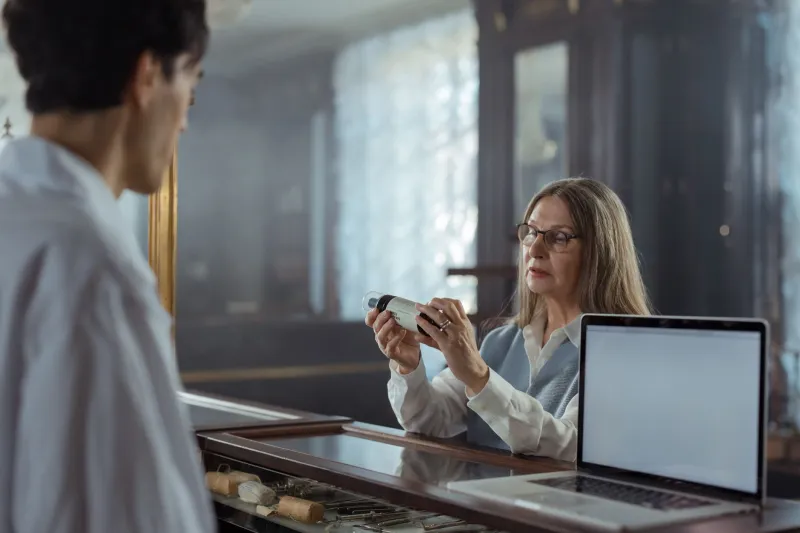
Photo: Rose and Trev Clough , CC BY-SA 2.0, via Wikimedia Commons
CBD is legal to buy in the UK as a food supplement, but that does not automatically make it invisible at work. If your employer runs drug tests, or if you work in a safety-sensitive role, the sensible move is to understand the policy before you are sitting in a test centre holding a plastic cup.
This article is general information, not legal advice. Employment rules, contracts and testing policies vary. If you are facing a specific problem, speak to your union rep, ACAS, Citizens Advice or a solicitor who knows employment law.
Why CBD and workplace testing overlap
Most workplace drug tests are not looking for CBD itself. They typically screen for THC, the cannabinoid that causes the high, or for THC metabolites that stay in the body after use. CBD products are not supposed to contain THC above the UK limit, but trace amounts can be present, especially in full-spectrum or broad-spectrum oils. The key word is 'trace'. It is usually very small. But drug tests are not always interested in context.
There is no reliable way to guarantee that any CBD product will never trigger a positive result. Product quality varies, doses vary, and individual metabolism varies. A certificate of analysis can tell you what was in a batch, but it cannot tell you what will show up in your sample. Anyone who promises otherwise is selling confidence, not science.
Read the policy before the panic
Start with your contract, staff handbook and any drug and alcohol policy. Look for when testing can happen: pre-employment, random, after an incident, or when there is reasonable suspicion. Check who authorises tests, what is tested for, what the cut-off levels are and what happens if a result is positive.
Some employers have a blanket policy. Some only test in safety-critical roles. Some have a support-first approach and treat a positive result as a health and welfare issue rather than an automatic disciplinary. You cannot know which applies to you until you read the paperwork.
If the policy is vague, ask for clarification in writing. 'Can you confirm whether CBD products are covered by the drug-testing policy?' is a fair question. You do not have to explain your entire health history to ask it.
Safety-sensitive roles deserve extra care
If you drive for a living, operate machinery, work at height, handle medication or work in aviation, rail, maritime or construction, your employer is likely to take a stricter view. That is not necessarily unfair. A impaired judgement call in those jobs can hurt people.
In safety-sensitive roles, the safest approach is to speak to your GP or pharmacist before using CBD, especially if you are also taking prescribed medication. Do not stop a prescribed medicine to avoid a test. That is a conversation for a clinician, not a forum thread.
If your CBD use is for a health reason, say so clearly and keep it separate from any claim that it makes you unfit to work. Employers are more likely to respond well to 'here is what I take, here is why, here is the product information' than to a vague reassurance that it is 'just natural'.
Should you disclose before a test?
There is no single answer. If your employer's policy asks you to declare medication or supplements before testing, declare them. If a test is coming up and you use CBD regularly, it is usually better to raise it early than to explain it afterwards.
Timing matters. Mentioning CBD for the first time after a positive result can look like an excuse, even when it is true. Mentioning it before the test gives your employer a chance to note it and, if they are sensible, to consider it alongside the lab result.
Keep it factual. Name the product, the strength, how much you use and how often. Bring the label, the batch number and the certificate of analysis if you have one. You are not asking for special treatment. You are giving context.
What to ask HR before a test
A calm list of questions is better than a long speech. You could ask:
- What exactly is being tested for?
- Is the test looking for THC, CBD or both?
- What cut-off level does the lab use?
- Will a positive screening result be confirmed by a laboratory?
- What is the policy on declared supplements and prescription medicines?
- Who will see the result, and how is it stored?
- What support is available if the result is positive?
You do not need to ask all of these at once. Pick the ones that matter to your role and your policy. If you are in a union, ask your rep to sit in on the conversation. If you are not, take notes and ask for the policy to be sent to you.
If a test comes back positive
Do not panic and do not try to talk your way around the science. Ask for the laboratory confirmation, the cut-off level and the policy that applies. If you have product information, provide it. If you have a prescription or a clinician's note, provide that too.
A positive result does not always mean automatic dismissal. It depends on the employer, the role, the policy and the circumstances. But it is much easier to manage if you have been honest from the start.
The bottom line
CBD is not a magic shield against a drug test. If you use it, know what is in it, keep the paperwork and understand your employer's policy. If you are in a safety-sensitive job, be extra cautious and get proper advice. The conversation with HR may be awkward, but it is less awkward than a surprise meeting after a test result you did not see coming.